|
Palestinians have transformed the hellfire of prison into a kiln that forges the struggle. ͏ ͏ ͏ ͏ ͏ ͏ ͏ ͏ ͏ ͏ ͏ ͏ ͏ ͏ ͏ ͏ ͏ ͏ ͏ ͏ ͏ ͏ ͏ ͏ ͏ ͏ ͏ ͏ ͏ ͏ ͏ ͏ ͏ ͏ ͏ ͏ ͏ ͏ ͏ ͏ ͏ ͏ ͏ ͏ ͏ ͏ ͏ ͏ ͏ ͏ ͏ ͏ ͏ ͏ ͏ ͏ ͏ ͏ ͏ ͏ ͏ ͏ ͏ ͏ ͏ ͏ ͏ ͏ ͏ ͏ ͏ ͏ ͏ ͏ ͏ ͏ ͏ ͏ ͏ ͏ ͏ ͏ ͏ ͏ ͏ ͏ ͏ ͏ ͏ ͏ ͏ ͏ ͏ ͏ ͏ ͏ ͏ ͏ ͏ ͏ ͏ ͏ ͏ ͏ ͏ ͏ ͏ ͏ ͏ ͏ ͏ ͏ ͏ ͏ ͏ ͏ ͏ ͏ ͏ ͏ ͏ ͏ ͏ ͏ ͏ ͏ ͏ ͏ ͏ ͏ ͏ ͏ ͏ ͏ ͏ ͏ ͏ ͏ ͏ ͏ ͏ ͏ ͏ ͏ ͏ ͏ ͏ ͏ ͏ ͏ ͏ ͏ ͏ ͏ ͏ ͏ ͏ ͏ ͏ ͏ ͏ ͏ ͏ ͏ ͏ ͏ ͏ ͏ ͏ ͏ ͏ ͏ ͏ ͏ ͏ ͏ ͏ ͏ ͏ ͏ ͏ ͏ ͏ ͏ ͏ ͏ ͏ ͏ ͏ ͏ ͏ ͏ ͏ ͏ ͏ ͏ ͏ ͏ ͏ ͏ ͏ ͏ ͏ ͏ ͏ ͏ ͏ ͏ ͏ ͏ ͏ ͏ ͏ ͏ ͏ ͏ ͏ ͏ ͏ ͏ ͏ ͏ ͏ ͏ ͏ ͏ ͏ ͏ ͏ ͏ ͏ ͏ ͏ ͏ ͏ ͏ ͏ ͏ ͏ ͏ ͏ ͏ ͏ ͏ ͏ ͏ ͏ ͏ ͏ ͏ ͏ ͏ ͏ ͏ ͏
To our friends and comrades,
Palestinian prisoners are the center of the liberation struggle. Their disciplined organization, their demands for a life of dignity, their intellectual production all motor the movement for a liberated Palestine. Every year on April 17, we honor them.
The martyred prisoner Walid Daqqa used the term “big prison” to describe a homeland under occupation and “little prison” for the architecture of the cells in which Zionism manifests in its purest, most malignant form. The prison is fortified by barbed wire, Israeli legal codes, and international impunity. Imprisonment itself steals childhood from children, abducts parents from their sons and daughters, and separates seasoned leaders from the resistance movement. But Palestinians have transformed the hellfire of prison into a kiln that forges the struggle. Leaders have emerged from the prisons’ torture chambers with wisdom on how to wage war against their torturers. From behind bars, writers like Daqqa and Wisam Rafeedie have produced literature that has moved both the nation and the world into liberatory action.
The objective of Zionism is the destruction of the Palestinian. Former prisoner Hadeel Shatara sums it up like so: “You take a hostage to do an exchange […] to achieve something. Israel imprisons Palestinians to end our existence.”
The prison walls mark the boundary of Zionist imagination. Every US-backed Israeli onslaught, incursion, and massacre follows the logic of the dungeon. The political prisoner tortured at Sde Teiman and the family buried under rubble in Dahieh are not separate victims of separate campaigns, but targets of a single colonial project, the existence of which hinges on annihilating what it cannot subjugate.
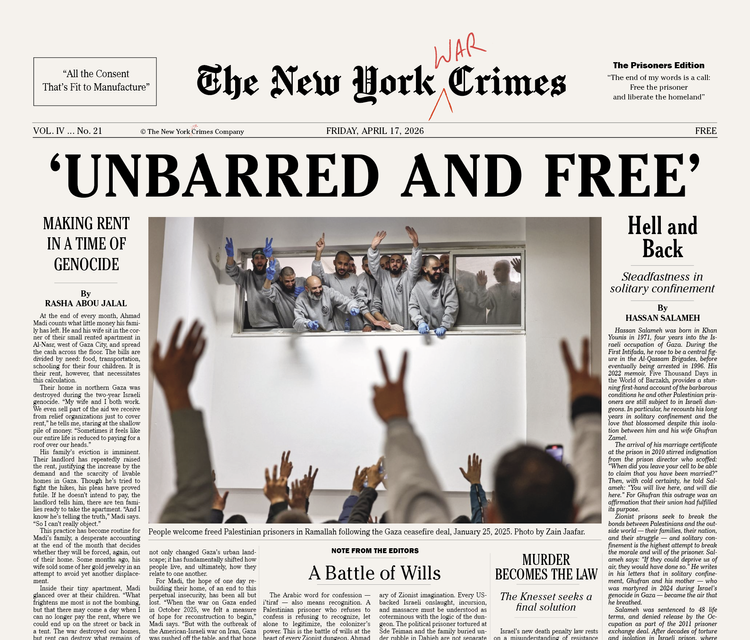
At marches, bodegas, cafes, and bookshops, you’ll find issue 21 of the New York War Crimes — the Prisoner’s Day edition. In the pages of this edition, produced in collaboration with the Palestinian Youth Movement, you will read about hunger strikers who have turned their bodies into weapons. You will bear witness to the terror of torture at the Sde Teiman concentration camp. You will find yourself seated on the floor of Ashkelon prison among revolutionaries plotting their victory, hear the triumphant verses uttered in court by Ayham Kamamji after his recapture following the Gilboa prison break, and learn of the grassroots efforts to free Lebanese people abducted from their land. Finally, this edition highlights the international campaign, Freedom for Palestinian Political Prisoners, which asserts the centrality of the prisoners’ movement to every facet of our fight for liberation. Was this email forwarded to you? Sign up to receive it here.
|
All out for Palestinian prisoners
|
|
Join an action near you Bay Area
Saturday, April 18, 1 to 5pm
Sumud Mural, 401 26th St, Oakland Toronto Friday, April 17, 5:30pm Sankofa Square New York City Saturday, April 18, 4:30pm Herald Square, Manhattan London Friday, April 17, 5:30 Parliament Square Global Day of Fast Friday, April 17, 24 hours #Free_Them_All Vancouver Friday, April 17, 6:30 pm Creekside Park Edmonton Friday, April 17, 4 PM City Hall New Haven Friday, April 17, 5:30–7:00 PM New Haven Green Montreal Sunday, April 19, 1:30pm Centre St-Pierre (1212 rue Panet)
Find more locations here
|
|
On April 8th, 2026, beloved comrade and valued community member Jakhi McCray accepted a non-cooperating plea agreement, acknowledging sole responsibility for burning 11 NYPD vehicles in June of 2025. Jakhi accepted this plea after the prosecution confirmed that they would not seek a terrorism enhancement during sentencing. He now faces a minimum of five years in prison for this righteous and courageous act. Jakhi’s case is a clear example of a vicious epidemic. The state stacked the charges, threatened the enhancements, and made the sentencing exposure so severe that fighting it all the way through trial would mean gambling years of life against a system that was never designed to be fair. We reject standards of innocence or guilt where the safety of pig cars is valued above the millions of lives subjected to starvation, torture, and genocide. To the state, human life is cheap — especially Black, Palestinian, and Indigenous life.
Read our full statement.
Support Jakhi by: Attending court support for Jakhi on April 29, at 100 Centre St, New York, NY
Following his ongoing support committee @jakhisolidarity
Supporting other US political prisoners like Tarek Bazrouk, Casey Goonan, the Prairieland 19, Derell Mickles, Mumia Abu-Jamal, Shukri Abu Bakr, Ghassan Elashi, and all those imprisoned by the state for their advocacy and beliefs.
Supporting Palestinian prisoners at the Palestinian Prisoners’ Day March in NYC on April 18 at 4:30pm in Herald Square
|
|
We leave you with the words of Wisam Rafeedie, a former Palestinian prisoner whose book, The Trinity of Fundamentals, was published in 2024 in collaboration with the Palestinian Youth Movement and 1804 Books The struggle of prisoners has a special impact on a person. It is a struggle where the simplest things for an ordinary person–air, water, food, medicine–must be paid for in blood. Men are martyred for the sake of an extra half hour of outdoor recreation; the prisoner’s intestines twist in knots from the pain of hunger for extra minutes to the visits from his mother, wife, or son. Emaciated prisoners suffer from illnesses associated with hunger strikes–weak bones, hair falling out, the loss of teeth–all in order to have hot water to bathe in, or to kiss and embrace their child during the semi-monthly visits, or to be allowed to bring in oil or soap or cigarettes, or so that they can keep their academic notebooks, or so that they can get hold of those books in the first place, or so that they are not condemned to isolation for demanding their rights. Things that are trivial or paltry or routine to a non-prisoner can become an aspiration and objective in prison, requiring heroism, sacrifice, or martyrdom. Imprisonment and a clandestine experience both transform the ordinary into a dearly desired ambition.
|
Until liberation,W.A.W.O.G.Twitter: @wawog_now Instagram: @wawog_now
Telegram: t.me/PopularUniversity For press inquiries: press@wawog.com For general inquiries: wawog@wawog.com Was this email forwarded to you? Sign up to receive it here.
|
|
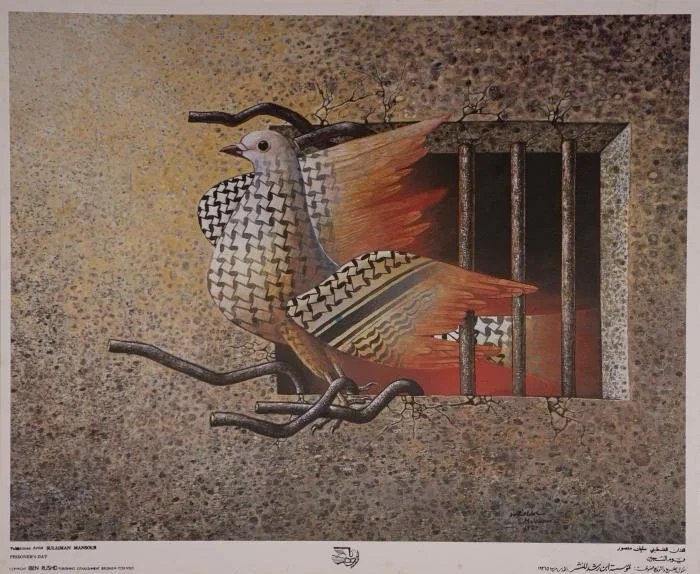
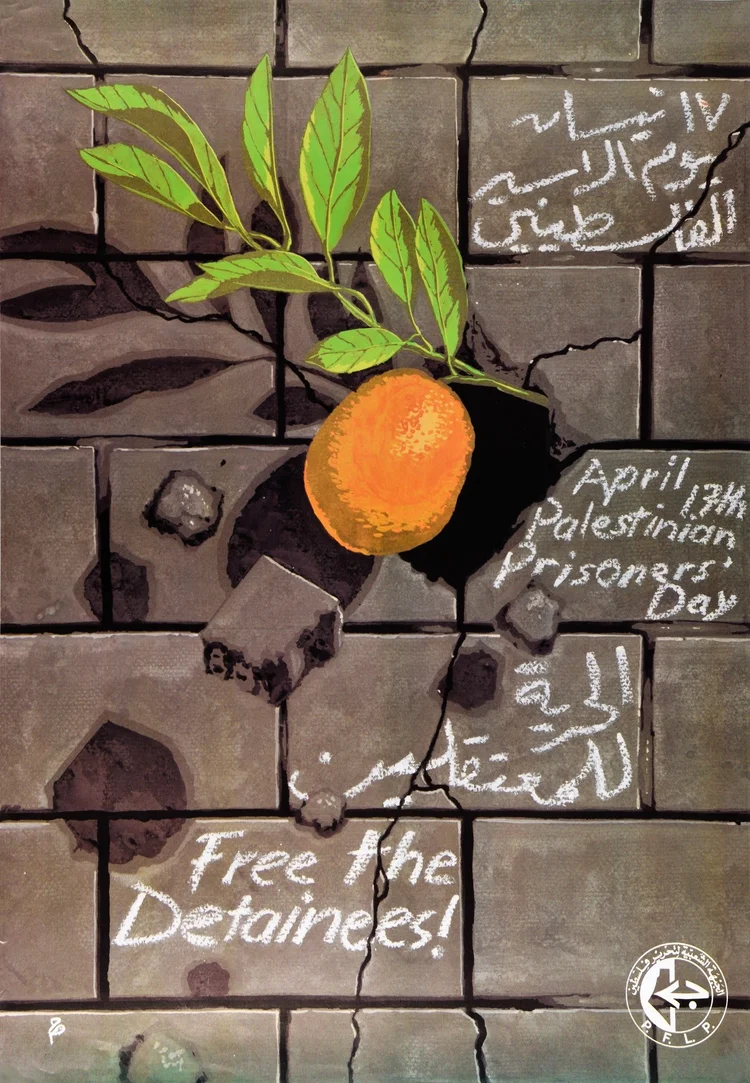
1) W.A.W.O.G./PYM produced 21st edition of the NYWC. 2) Archival poster by Sliman Mansour. 3) Archival poster by Jihad Mansour.
|
|
|
|