|
The occupation has taken direct aim at Palestine’s food sovereignty. ͏ ͏ ͏ ͏ ͏ ͏ ͏ ͏ ͏ ͏ ͏ ͏ ͏ ͏ ͏ ͏ ͏ ͏ ͏ ͏ ͏ ͏ ͏ ͏ ͏ ͏ ͏ ͏ ͏ ͏ ͏ ͏ ͏ ͏ ͏ ͏ ͏ ͏ ͏ ͏ ͏ ͏ ͏ ͏ ͏ ͏ ͏ ͏ ͏ ͏ ͏ ͏ ͏ ͏ ͏ ͏ ͏ ͏ ͏ ͏ ͏ ͏ ͏ ͏ ͏ ͏ ͏ ͏ ͏ ͏ ͏ ͏ ͏ ͏ ͏ ͏ ͏ ͏ ͏ ͏ ͏ ͏ ͏ ͏ ͏ ͏ ͏ ͏ ͏ ͏ ͏ ͏ ͏ ͏ ͏ ͏ ͏ ͏ ͏ ͏ ͏ ͏ ͏ ͏ ͏ ͏ ͏ ͏ ͏ ͏ ͏ ͏ ͏ ͏ ͏ ͏ ͏ ͏ ͏ ͏ ͏ ͏ ͏ ͏ ͏ ͏ ͏ ͏ ͏ ͏ ͏ ͏ ͏ ͏ ͏ ͏ ͏ ͏ ͏ ͏ ͏ ͏ ͏ ͏ ͏ ͏ ͏ ͏ ͏ ͏ ͏ ͏ ͏ ͏ ͏ ͏ ͏ ͏ ͏ ͏ ͏ ͏ ͏ ͏ ͏ ͏ ͏ ͏ ͏ ͏ ͏ ͏ ͏ ͏ ͏ ͏ ͏ ͏ ͏ ͏ ͏ ͏ ͏ ͏ ͏ ͏ ͏ ͏ ͏ ͏ ͏ ͏ ͏ ͏ ͏ ͏ ͏ ͏ ͏ ͏ ͏ ͏ ͏ ͏ ͏ ͏ ͏ ͏ ͏ ͏ ͏ ͏ ͏ ͏ ͏ ͏ ͏ ͏ ͏ ͏ ͏ ͏ ͏ ͏ ͏ ͏ ͏ ͏ ͏ ͏ ͏ ͏ ͏ ͏ ͏ ͏ ͏ ͏ ͏ ͏ ͏ ͏ ͏ ͏ ͏ ͏ ͏ ͏ ͏ ͏ ͏ ͏ ͏ ͏ ͏
To our friends and comrades,
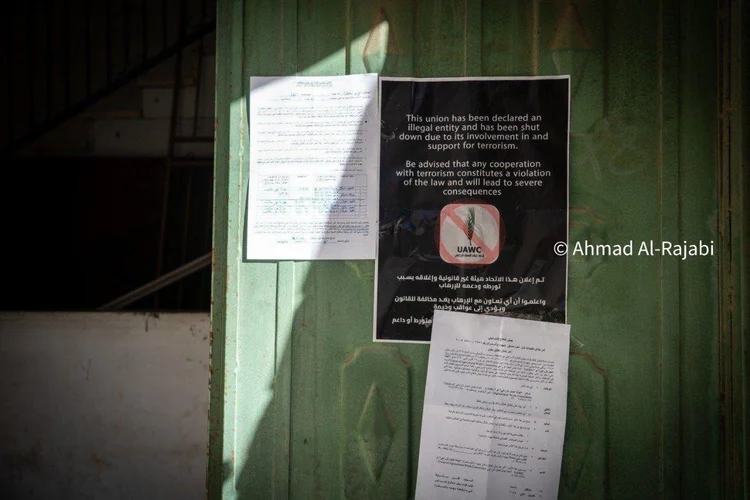
In an interview filmed shortly before his murder in 1987, Thomas Sankara, the revolutionary prime minister of Burkina Faso, defined true food “aid” as ploughs, shovels and other instruments which would enable the Burkinabe to self-sustain. Amilcar Cabral led Guinea Bissau to independence as an agronomist. It was the establishment of a breakfast program for Black and impoverished children which earned the Black Panther Party its “communist” designation. Food sovereignty is land sovereignty. In national liberation, the Palestinian people demand both. On Monday, December 1st, Israeli security forces raided the headquarters of the Union of Agricultural Work Committees (UAWC) in Ramallah and its community Seed Bank in Al-Khalil (“Hebron”). The raid of the UAWC—the largest NGO committed to supporting food sovereignty and biodiversity in Palestine—is the latest in an escalating string of attacks from both settlers and occupation forces against Palestinian fellaheen (land-workers). As Israel has asphyxiated the Palestinian economy, agriculture remains one of the only viable economic sectors. While the occupation has manufactured famine in Gaza by choking off aid and obliterating its agricultural industry, it has subjected the fellaheen in the West Bank to deliberate impoverishment intended to dispossess them of their lands.
|
|
The raid was captured in a lurid segment which aired on a Hebrew news station. Armed security officials blocked roads leading to the UAWC office in a densely populated part of Ramallah in order to violently search the premises. Soldiers confiscated computers, hard drives, financial documents and logistical equipment and ransacked the site before welding the door shut. The film shows staff blindfolded and handcuffed. Male workers were forced to kneel while ziptied, a degrading position that has become far too familiar over the last two years. Eight were detained. Despite its location in Area A of the West Bank, which is fully administered by the Palestinian Authority, the UAWC is frequently subjected to IOF harassment and censure. As a Palestinian civil society organization whose primary function is fostering the steadfastness of Palestinian peasants and land owners, the UAWC operates in full accordance with international humanitarian law. Prior to being destroyed, the seed bank housed thousands of heirloom seed cultivars indigenous to Palestine, many of which are older than the state which commandeered their destruction. This ongoing annihilation of Palestine’s genetic and agronomic heritage embodies what the feminist scholar Tithi Bhattacharya referred to as Israel’s assault on the lifemaking capacities of the Palestinian people. We call on peasants’ organizations, social movements and allies worldwide to condemn this attack and the ongoing retaliation against members of an agricultural labor organization.
|
Every restaurant is an embassy
|
|
“Food is, of course, integral to national identity – and how better for a fledgling settler nation to forge its cultural identity than to dispossess the people whose food practices are intrinsically tied to the land, while simultaneously adopting and performing these same mannerisms and relationships in an effort to legitimize themselves?” – Amanny Ahmad “Israeli” society is built on an amalgamation of influences—from Eastern Europe and across the Levant and North Africa—gutted of their specificity and regurgitated into the barren colonial frankenstein that occupies Palestine today. Ecocide is a major tactic in Israel’s occupation; the destruction of native agricultural crops, like olive trees, is followed by afforestation projects that seek to reshape the landscape and create a more familiar environment for European settlers. This tactic seeks to interrupt the continuity of Palestinian culture and specificity, overwriting the land both with settlers and imported scenery. This intentional destruction extends across Gaza and the rest of occupied Palestine. Alongside the destruction of foliage is the control of foodways; where plants used in traditional Palestinian cuisine grow, the occupation criminalizes foraging, keeping Palestinians from maintaining those ties to the land. It is no coincidence that Israel’s first “agricultural school” housed members of the Palmach, the elite strike force and special forces unit of the IOF’s predecessor, the Haganah. Named Mikveh Israel, the school many years later hosted a cabal of IOF reservists and Israeli businessmen who conceived the plot to integrate "humanitarian aid" into Israel’s military strategy—now known as the disgraced Gaza Humanitarian Foundation. Every kibbutz is a military outpost, and every Israeli restaurant an embassy. Throughout the U.S., Zionists own restaurants nestled under the category of “Mediterranean” or “Middle Eastern” with menus full of foods found on the average Palestinian dinner table. Often they will not obviously identify as “Israeli”—instead, they seek to recondition how the public associates these foods using the vagueries afforded by the term Middle Eastern. First, they are ripped from their history. Then, hidden in the “About” section, these restaurants purport a global sensibility from Eastern Europe to Tel Aviv. Just as the Zionist project asserts its control over the environment, it imposes a false history on Palestinian foods. This is cultural genocide in practice—a replacement of the hegemonic “Israeli” identity over Palestinian, Arab, and other. Israeli restaurants and cookbooks push fabricated narratives of national cuisine and land-based knowledge in order to legitimize the settler-colonial state’s right not only to exist, but to expand. The success of these restaurants is the success of the entity itself.
|
|
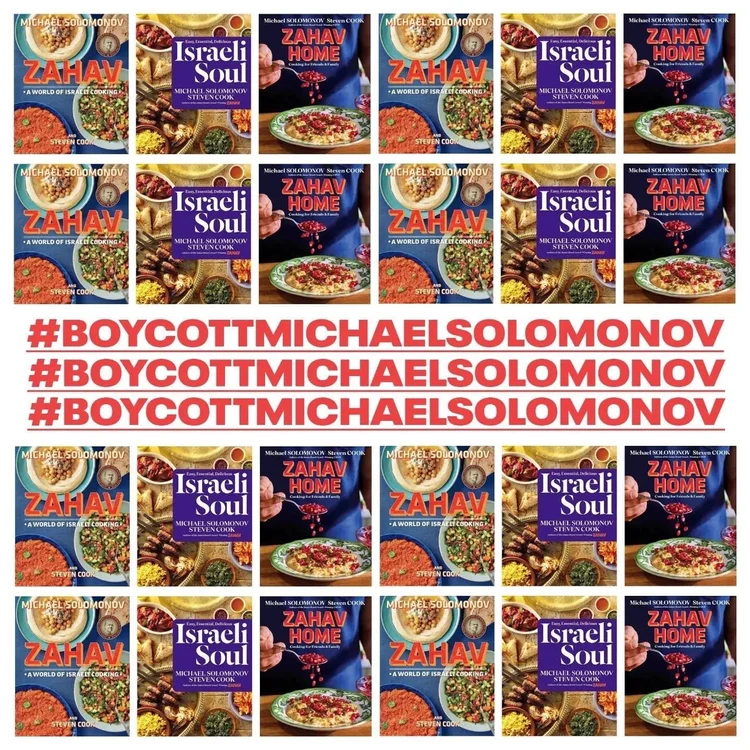
“In my restaurant, we made a case, I think, for Israel through food.” – Michael Solomonov Israeli-American celebrity chef Michael Solomonov would have you think his brother’s death was biblical. In 2003, after volunteering to cover a fellow soldier’s patrol duty in an apple orchard near the Lebanese border in the Upper Galilee—one of Israel’s primary agricultural hubs—IOF reservist David Solomonov was killed by Hezbollah sniper fire. A memorial dinner celebrating David’s life inspired Chef Michael to bring “Israeli cuisine” to the world. After spending time in Israeli kitchens, Solomonov returned to Philadelphia to establish an “Israeli foods” empire with business partner Steven Cook, founding their hospitality group CookNSolo and flagship restaurant Zahav in 2008. Now, Cook and Solomonov have propagated over two dozen Israeli restaurants and kosher fast-food joints across Philly, Brooklyn, Miami, and Las Vegas. They have also produced four cookbooks and a documentary film, In Search of Israeli Cuisine. Solomonov’s success in putting both Israel and Philly on the culinary map led the settler-state’s Ministry of Tourism to name him a culinary ambassador for the state of Israel in 2017, charged with “[championing] Israel’s extraordinarily diverse and vibrant culinary landscape” through agritourism: guiding foreign journalists on culinary tours in Israel, and “bringing Israel home” to the United States through a culinary how-to web series produced in partnership with the Jewish Food Society of New York, and hosting diplomatic dinners and IOF-affiliated fundraisers at his restaurants. “What we’ve done in the kitchen since then has been so much more productive for Israel than had I become a soldier,” Solomonov told the Philadelphia Inquirer in 2019 shortly before winning his fifth James Beard Award. Later that year, Chef Solo joined the Jewish National Fund-USA’s Culinary Advisory Council to help found the JNF’s Galilee Culinary Institute, a four-year culinary program that aims to establish a “food-tech ecosystem” in the Northern Galilee—using techniques like CRISPR gene-editing to create drought-resistant crops for a settler-nation persistent on “making the desert bloom.” WAWOG and a coalition of culinary workers in the Philly region responded to this plated propaganda by calling for a boycott of Solomonov’s empire. “While the IOF strips Gaza of the conditions for life,” a statement read, “Solomonov and his ilk expand their businesses.” The coalition opposing CookNSolo has detailed how its bohemian image disguises Zionist dispossession, from hosting fundraisers for IOF charities to using products grown on colonized land. Join the boycott of all CookNSolo establishments and goods.
|
"Freekeh and Fellahin: A Symbiotic Relationship of Sumud" by Amanny Ahmad. Jerusalem Quarterly, Issue 98, Summer 2024. "The Struggle for Za’atar and Akkoub: Israeli Nature Protection Laws and the Criminalization of Palestinian Herb-Picking Culture" by Rabea Eghbariah. Draft article, 2020. "'Famine Foods' and the Values of Biodiversity Preservation in Israel-Palestine" by Courtney Fullilove. Isis, Vol.113 No.3, September 2022. "'Making the Desert Bloom': A Myth Examined" by Alan George. Journal of Palestine Studies, Vol.8 No. 2, Winter 1979. "How Israel Dominates the Palestinian Economy" by Taher Labadi. Jacobin, January 2024. "Food Sovereignty in a Palestinian Economy of Resistance" by Fathi Nimer. Al-Shabaka, August 27, 2024. "Cultivating Catastrophe: Review of 'Milk and Honey: Technologies of Plenty in the Making of a Holy Land.'" by Tom Selwyn. Jerusalem Quarterly, Issue 99, Autumn 2024. "Developing a Palestinian Resistance Economy through Agricultural Labor" by Rayya El Zein. Journal of Palestine Studies, Vol.46 No.3, Spring 2017. "Foodways and Foodwashing: Israeli Cookbooks and the Politics of Culinary Zionism" by Ilan Zvi Baron and Galia Press-Barnathan. International Political Sociology, Vol.15 No.3, September 2021.
|
Defend the land, feed the people
|
In May 2024, the UAWC launched its Stop Gaza Starvation campaign to provide critical support and immediate intervention to Palestinians affected by bombardment, destruction, and displacement in the face of the Israeli occupation’s ethnic cleansing campaign in Gaza and the West Bank. The urgent relief effort has raised over $270k USD to provide food, water, tents, clothing, and agricultural rehabilitation. You can learn more about volunteering with the organization here. PALSHIELD partners with West Bank farming communities facing daily challenges such as settler violence, land confiscation, and restricted access to vital resources like water and healthcare. By supplying medical equipment, protective gear, and security tools, PALSHIELD helps these communities safeguard their lives and sustain their essential work despite ongoing threats. The Sameer Project is a donations-based initiative, led by Palestinians in the diaspora, working to supply aid to displaced families in Gaza. Support their RETURN HOME campaign here. Palestinian Social Fund raises unconditional funding for cooperative farms in Palestine through grassroots efforts. These farms are started by youth who are returning to the land to reclaim food sovereignty and control their own destiny. Save Sebastia is a campaign “to protect the archaeological site of Sebastia from an Israeli scheme aiming to seize vast areas under the pretext of ‘protecting the heritage.’” Many Lands Mutual Aid is an ongoing aid distribution project focused in the Deir Al-Balah camp. Support Many Lands Mutual Aid here. Gaza Soup Kitchen is an on-the-ground initiative to feed families in Gaza. Donate here.
|
Until liberation,W.A.W.O.G.Twitter: @wawog_now Instagram: @wawog_now
Telegram: t.me/PopularUniversity For press inquiries: press@wawog.com For general inquiries: wawog@wawog.com Was this email forwarded to you? Sign up to receive it here.
|
|
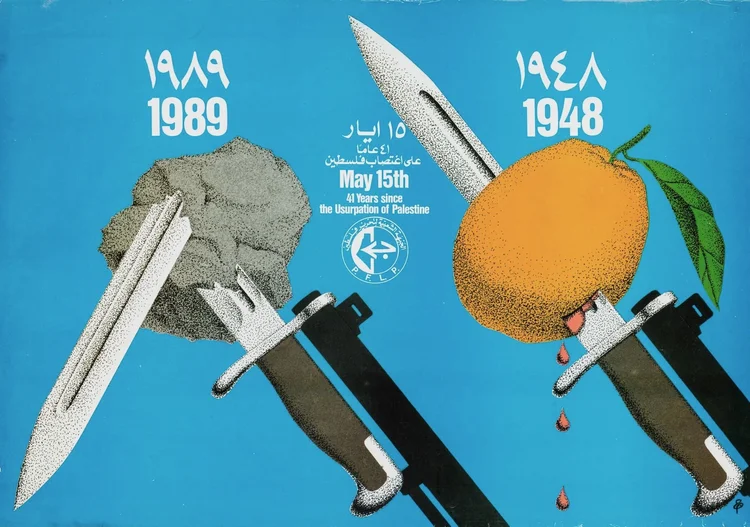
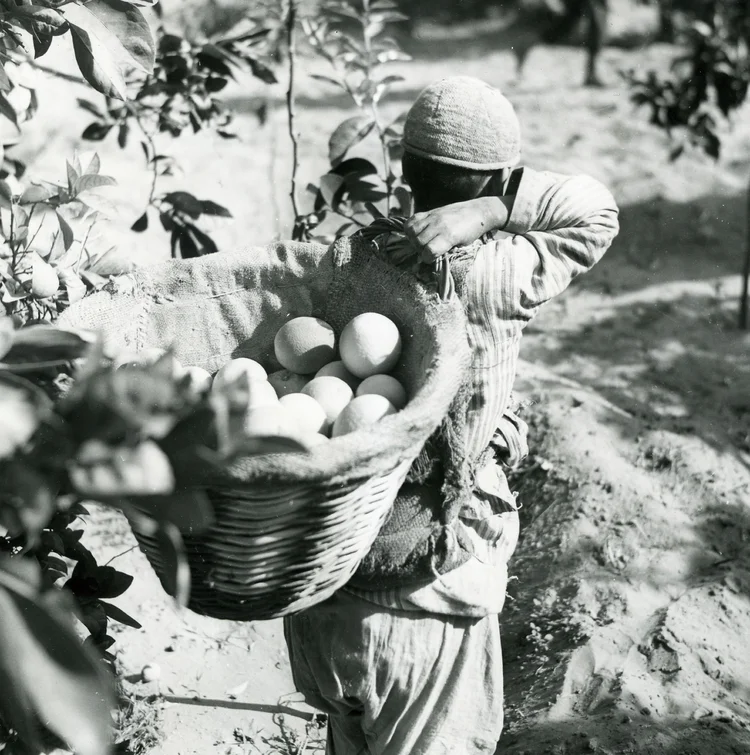
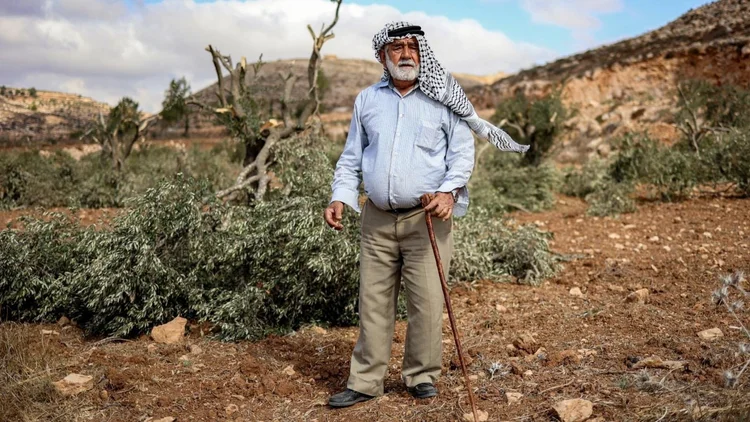
1) The aftermath of the occupation’s raid of the UAWC office in Ramallah. 2) A poster entitled 'May 15th, 41 Years since the Usurpation of Palestine' issued by the Popular Front for the Liberation of Palestine (PFLP) in 1989 marking 41 years since the Palestinian Nakba of 1948. 3) An image from W.A.W.O.G.’s CookNSolo boycott campaign featuring the phrase #BoycottMichaelSolomonov surrounded by a grid of Solomonov’s cookbooks. 4) Archival photo of a Palestinian orange picker in Jaffa, c. late 19th to early 20th century. 5) Palestinian farmer Mohamed Suleiman inspects olive trees Israeli settlers cut down in a late-night attack on Oct. 6, 2025.
|
|
|
|