|
Our most effective weapon is the one we have to hand. ͏ ͏ ͏ ͏ ͏ ͏ ͏ ͏ ͏ ͏ ͏ ͏ ͏ ͏ ͏ ͏ ͏ ͏ ͏ ͏ ͏ ͏ ͏ ͏ ͏ ͏ ͏ ͏ ͏ ͏ ͏ ͏ ͏ ͏ ͏ ͏ ͏ ͏ ͏ ͏ ͏ ͏ ͏ ͏ ͏ ͏ ͏ ͏ ͏ ͏ ͏ ͏ ͏ ͏ ͏ ͏ ͏ ͏ ͏ ͏ ͏ ͏ ͏ ͏ ͏ ͏ ͏ ͏ ͏ ͏ ͏ ͏ ͏ ͏ ͏ ͏ ͏ ͏ ͏ ͏ ͏ ͏ ͏ ͏ ͏ ͏ ͏ ͏ ͏ ͏ ͏ ͏ ͏ ͏ ͏ ͏ ͏ ͏ ͏ ͏ ͏ ͏ ͏ ͏ ͏ ͏ ͏ ͏ ͏ ͏ ͏ ͏ ͏ ͏ ͏ ͏ ͏ ͏ ͏ ͏ ͏ ͏ ͏ ͏ ͏ ͏ ͏ ͏ ͏ ͏ ͏ ͏ ͏ ͏ ͏ ͏ ͏ ͏ ͏ ͏ ͏ ͏ ͏ ͏ ͏ ͏ ͏ ͏ ͏ ͏ ͏ ͏ ͏ ͏ ͏ ͏ ͏ ͏ ͏ ͏ ͏ ͏ ͏ ͏ ͏ ͏ ͏ ͏ ͏ ͏ ͏ ͏ ͏ ͏ ͏ ͏ ͏ ͏ ͏ ͏ ͏ ͏ ͏ ͏ ͏ ͏ ͏ ͏ ͏ ͏ ͏ ͏ ͏ ͏ ͏ ͏ ͏ ͏ ͏ ͏ ͏ ͏ ͏ ͏ ͏ ͏ ͏ ͏ ͏ ͏ ͏ ͏ ͏ ͏ ͏ ͏ ͏ ͏ ͏ ͏ ͏ ͏ ͏ ͏ ͏ ͏ ͏ ͏ ͏ ͏ ͏ ͏ ͏ ͏ ͏ ͏ ͏ ͏ ͏ ͏ ͏ ͏ ͏ ͏ ͏ ͏ ͏ ͏ ͏ ͏ ͏ ͏ ͏ ͏ ͏
To those who want to read,
|
|
it is, again, a time for revolutionaries to expropriate printing presses. The internet, for all its underground potential, has become almost entirely privatized, bordered, unfree. On Elon Musk’s X (formerly Twitter), anything we say can be used to train X’s artificial intelligence models. On Instagram and Facebook, thanks to Meta’s new community standards, anti-Zionist speech is increasingly suppressed. (The term “Zionist” is more likely to be flagged as hate speech than it was prior to October 7th, 2023, even though it is less likely to be understood as a synonym for “Jewish” than ever before.) There are restrictions on physical media too, of course. The US Postal Service has its own history of censorship and surveillance. Pamphlets can be seized, paper burns. No medium allows for totally unbounded expression and circulation. Still, there is something about a free newspaper that makes all the meanings of material suddenly cohere. Lenin knew it. The Black Panther Party knew it. And we know it — how words, in order to be printed, must be committed to paper; how the paper, in order to be read, must be passed from hand to hand; how these gestures toward solidity and solidarity, necessitated by the form, re-inscribe its content. Someone wants me to have this, you think when you don’t have to pay for it. And also, I don’t have to read this. I want to. “Because there is a war in Vietnam, because there is a Stokely Carmichael, because there is an active Resistance, there is also a new audience for independent publications, counter-institutions which can be started anywhere by persons of … serious commitment,” wrote Raymond Mungo, co-founder of the Liberation News Service, in a manifesto that was fairly highly circulated in 1968. Soon, Mungo’s vision of a leftist alternative to the Associated Press would prove radical enough to cultivate an expansive reach of serious, committed communists. At the height of its propagative influence, the LNS was sending its weekly information packets — containing news reports, analysis, photographs, and more — to the editors of over 300 underground newspapers, reaching millions of people. During this genocidal war on Gaza, social media has enabled messages from the ground to reach the world. Yet, those same platforms enact an algorithmic repression to divert those messages to the parts of the world who are already listening. Here, in the heart of empire, those who answer the calls from Palestine and Lebanon are subjected to heightened online surveillance and censorship. Our enemies are bolder now than they were in 1968. But they are not bigger. Crucially, they have ceded the terrain of physical connection, which it is now the task of the anti-imperialist left to reclaim, expand, and use to our advantage. This is the lesson we take from the guerillas and the fedayeen: the most effective weapon is the one we have to hand. Was this email forwarded to you? Sign up to get it in your inbox.
|
Learn the history of student repression on campus
|
|
In 1968, a coalition of Black, Asian, Chicano, and Native American student groups united as the Third World Liberation Front (TWLF) at San Francisco State University (then San Francisco State College). The TWLF led student strikes to demand the establishment of a Third World College to teach students about the history of anti-imperialist struggle in the Global South. A few months after these strikes began, another coalition of students at the University of California united under their own TWLF and organized a solidarity strike on the Berkeley campus. A trove of printed resources from TWLF remain in the University of California archive from this time, including photographs, communiques, directives, progress reports, committee texts, newspaper posters, and justifications for the strike. The archive of these printed materials testifies to the historical cowardice of university administration and their staunch refusal to reflect the wishes of the students they represent. In one document, titled ‘The State of the Campus.’ the TWLF at Berkeley provided an account of their correspondence with Chancellor Roger Heyns, who articulated his obfuscatory stance on student demands for a Third World College and his refusal to show amnesty for strikers who “violate any University rule in conjunction with the strike.” Sound familiar? Inhumane administrations during the 1960s student movements paved the way for university administrations during the 2024 student encampment movement. The document goes on to unpack how, instead of debating the issues publicly, “the Administration is trying to crush the strike using intimidation,” to shift the focus away from the demands of student protestors striking peacefully. Another document, titled ‘Police Riot’, rejects the administration’s characterization of the strikers as violent: “[The police] are are the ones who have provoked the violence by brutally attacking strikers and bystanders,” the document describes. TWLF students endured a double jeopardy, subjected both to interim suspensions from the university and criminal trials in court; an eerie premonition of 2024, when brave student protestors organized encampments in the face of brutal attacks by university administration, state patrols, and local police forces. Having access to these documents in print means that the language and perspective of student protestors cannot ever be manipulated or undermined in an effort to discredit their integrity.
|
Produce Radical Knowledge to Free Palestine and Stop Cop City
|
|
Archives are alive. At Interference Archive’s “This Is Not a Local Struggle” exhibition in Park Slope, Brooklyn, we are reminded that printed matter is not stable and inert, not destined for the ash heap of history, as our enemies have said, but rather a living document in service of liberation.
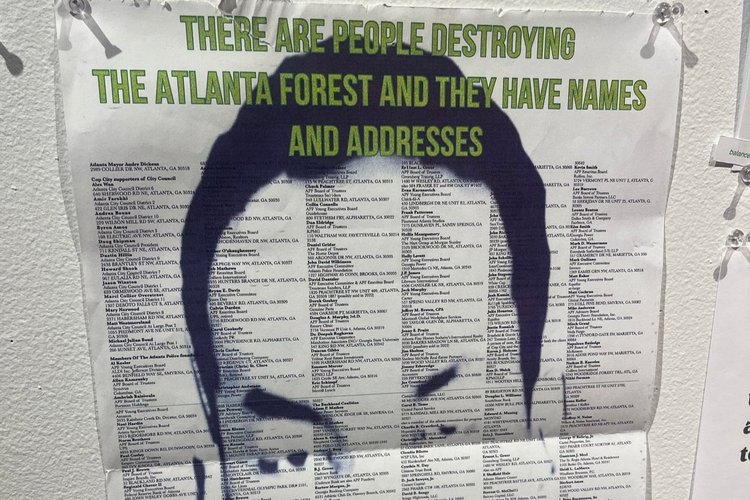
“This is Not a Local Struggle” presents ephemera from Atlanta’s Stop Cop City struggle. We read movement literature like an issue of Night Owls: A Seasonal Chronicle of Sabotage and Direct Action, communiqués providing “an anarchist critique of Block Cop City’s nonviolence proposal,” and a text entitled “The War in Front of Us: an anonymous, afro-pessimist militant’s challenge of the Stop Cop City movement.” We laughed at a pen-drawn zine of cop jokes and doodles. We saw stickers reading “Fuck the FBI / Fuck the raids” and stickers with forest emojis. We took pictures of event posters for a memorial potluck, t-shirts reading “Stop Cop City Everywhere” that expressed solidarity between Atlanta and NYC, a photograph of a “Free YSL and all prisoners” poster, and a New York War Crimes newspaper clipping. We were inspired by poetry, pamphlets, printouts of a movement timeline, and a list of class enemies destroying the Atlanta forest. These art forms are meant for reading, touching, and using. They clarify the networks of struggle from which we position ourselves. We can’t fight alone. The connections between the Palestinian solidarity movement and the Stop Cop City movement are further explained in “Cop City and Israel’s Genocide in Palestine Go Hand in Hand,” a mini zine from the exhibition printed in black ink on red paper. There, we hear from Victor, an Indigenous land defender who has since been freed from state captivity: “As I sit in this prison, I am watching the atrocities happening to the people of Palestine on the news. And in the newscasters’ words, I hear the same colonial rhetoric that has been used over the past 531 years against Indigenous peoples in the western hemisphere.” “This is Not a Local Struggle” is showing at Interference Archive until January 31, 2025 but if you’re not in NYC, files will also be posted online for reading and reproduction. Viva Viva, Tortuguita.
|
Help The Toronto W.A.W.O.G. Press fight imperialism in the Canadian media
|
|
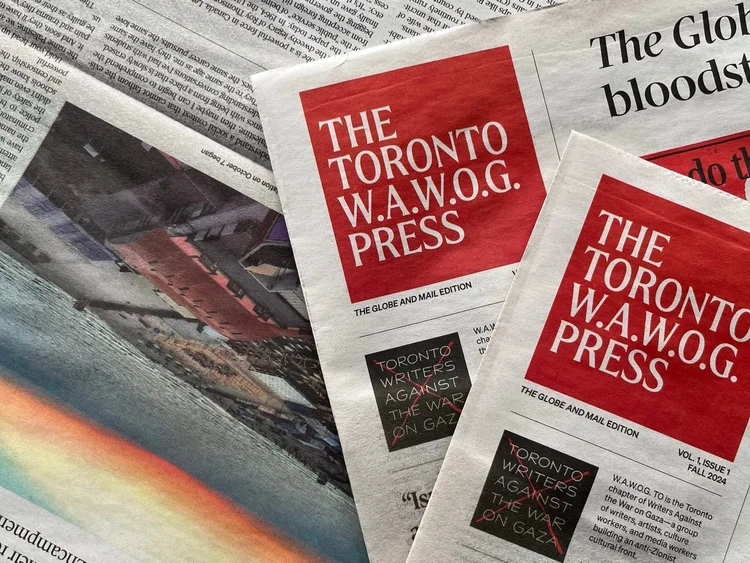
The Canadian media establishment, including the national paper of record The Globe & Mail, continues to manufacture consent for genocide. An analysis of the Globe’s platforming of imperial interests abroad and silencing of dissent at home is the front-page story on The Toronto W.A.W.O.G. Press, an initiative exposing Canadian media institution’s imperialist propaganda.
This is a call to action. Canadian newsrooms are compromised by corporate influence, reactionary nationalist columnists, elite capture, and Zionist pressure groups like Honest Reporting Canada. In the wake of the U.S. election it must be said: there is no moral salvation to be found north of the U.S/Canada border. Just more contempt, taken up by the media, for people whose existence threatens the status quo: activists, migrants, striking workers, cyclists… The Toronto W.A.W.O.G. Press works with local grassroots left media, renewing a time-worn publishing strategy. In The Toronto W.A.W.O.G. Press you’ll find original pieces (like the lead editorial chronicling “The Globe and Mail’s Bloodstained Record”) alongside archival texts from foundational movement media (“Canada’s Policy — Zionist From The Beginning”), dispatches from today’s frontlines (“After The Encampments”) as well as reprints from comrade publications. We form coalitions of counter-propaganda to resist the state’s normalization narratives and we resist traditional media’s disorienting historicity. Read our paper and connect with us. If you’re in Toronto, or other parts of Canada, and would like to stock The Toronto W.A.W.O.G. Press please email toronto@wawog.com.
|
|
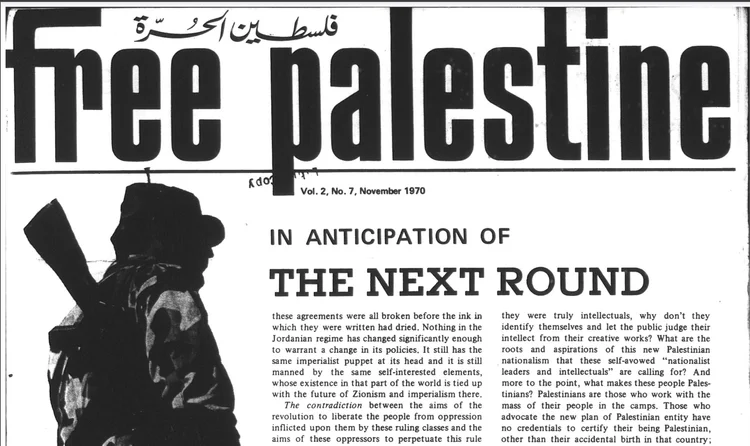
Movement papers from past and present help connect our struggle to history, validate our efforts, and endow us with strength. We have compiled important resources for you to continue your education: READ “Revolutionary Papers: The Counterinstitutions, Counterpolitics, and Countercultures of Anticolonial Periodicals” READ Revolutionary Papers’ evolving list of external resources on anticolonial, left, and oppositional movements and practices. READ Issue 143 of New Observations Magazine focusing on political prisoners, edited by the Jericho Movement. READ Covert Action Quarterly, the news behind the news from an anti-imperialist perspective. EXPLORE the complete archives of The Black Panther, the official newspaper of the Black Panther Party. EXPLORE the archives of Free Palestine, a monthly, later bi-monthly journal published by the Washington DC-based Friends of Free Palestine. EXPLORE the Civil Rights movement archive for history, stories, materials and images by Freedom Movement veterans.
|
|
We leave you with the words of Ezzedine Kalak, PLO representative in France and Palestinian poster archivist, from L’affiche palestinienne: “The poster is a fundamental tool among revolutionary media. Through posters the [Palestinian] ‘cause’ enters the homes and masses and resides in their eyes.”
|
Until liberation,W.A.W.O.G.Twitter: @wawog_now Instagram: @wawog_now For press inquiries: press@wawog.com For general inquiries: wawog@wawog.com Was this email forwarded to you? Sign up to receive it here.
|
|
1) A Woman from the Jabalia Palestinian Refugee Camp, North of the Gaza Strip, 1987 2) "Solidarity!" TWLF newspaper, Third World Liberation Front, 1969. 3) Stop Cop City Exhibit, Interference Archive, 2024 4) Toronto W.A.W.O.G Press, EJ from Toronto WAWOG, 2024, 5) Free Palestine, Friends of Free Palestine, 1970. 6) Journalist posters, WAWOG, 2024.
|
|
|
|